Showing posts with label gog. Show all posts

Wednesday, May 13, 2015

One massive roguelike - Tales of Maj'Eyal

NOTICE: The version of the game reviewed is the paid version, including the Ashes of Urh'Rok DLC, your experience with the base game may vary.

Tales of Maj'Eyal, Which I'll be calling TOME from now on, is interesting in that it's both a very young game, and a very old one. It started life in the 90s as a variant of the game Angband called  Pernband, based of the Pern series of books. Now, the Pern series is know for having a somewhat strained relation with it's fans at times, so it's no surprise that Pernband got slapped with a cease and desist letter. In the face of this, the game was reborn as Tales of Middle Earth, throwing out Pern and replacing it with things form Tolkien's writings, and was developed as this for years.

This actually continued up until 2010, when the game was recreated again, this time as Tales of Maj'Eyal, which is what I'm reviewing here. The developer did this for two reasons: First, it removed any possibility of the game getting a second cease and desist letter thrown at it and second, it allowed for parts of the game that didn't quite mesh with the Middle Earth setting, such as time magic and Psionic powers to make a lot more sense.

TOME is a roguelike that takes place on the continent of Maj’Eyal, currently in a time of relative peace after hundreds of years of war. Surprisingly, for a genre that's usually pretty light on story, there's actually a lot of it here, mostly told in letters and scrolls you find on your travels. There's actually a lot if information with each area of the game having it's own lore snippets to find and Despite spending several hours with this game, I've barely seen what it has to offer story-wise, there's that much info to take in.
Each dungeon in the game has several lore snippets, like this one here.
At it's core, TOME is roguelike dungeon crawler, complete with permadeath, interesting, the game has a few departures from typical roguelikes. The first is that the game has no consumables, there's no potions or scrolls. Instead you have infusions which you an equip and use. They work a lot like potions in other roguelikes, doing things like restoring hit points or decreasing damage for several turns, except instead of being used up, they go on cooldown for several turns after use. It's actually a pretty nifty system, as you never have to worry being cheated on potions, but you can't just spam your infusions when in trouble. In fact, to further discourage that, using an infusion grants a temporary debuff that increases the cooldown of other infusions.

On top of that, there's also the dungeons, instead of a single dungeon to get to the bottom of, TOME has several dungeons, with an overworld to connect them all. The dungeons are quite varied, from woods to a giant labyrinth. Some even have unusual gimmicks, like an underwater dungeon where you have to watch your air levels, or a den of sandworms where you need to rely on the worms that live there to dig new paths for you and if you're not quick enough, they'll collapse behind you.
Dungeons are varied not only in appearance, but enemies and floor layout/
The game also has a lot of race and class options. Not only are there typical classes like berserk or rogues, but there's also a lot of unique ones. One of the classes I tried was called the cursed, a fighter who's surrounded by a cloud of gloom, powered by raw hate, that debuffs enemies who get too close to you. There's also alchemists, who have a golem to help protect them and can make powerful explosives out of gems found in dungeons.

While you start with a few options available, You also have to unlock races and classes by doing various things, which range from the simple, such as killing 1,000 humanoids across all of your games, to the very difficult, One race in the Ashes of Urh'Rok DLC requires killing three very tough optional bosses in the same game.

The game also comes with several difficulty settings, the most unique of which is the permadeath setting. Alongside traditional permadeath and an exploration mode that gives you unlimited lives, There's also an adventure mode. Adventure mode is a sort of compromise between exploration and roguelike modes, you are given extra lives as you level up, but once you run out, the next death is permanent so there's a lot of options available to either turn the difficulty down for newcomers, or crank it up if your looking for an extra challenge.
TOME has a lot of character options to chose form. Also shown: proper dwarven naming.
The games graphics are pretty good. The game is tile based and the tiles are nice and detailed, with plenty of tile sets for the game's varied areas, there's even some nice splash images for loading screens and the occasional background image. There is however a small problem in that nothing is animated, all the tiles are static. Though the game does make up for this with spell and ability effects, providing some nice particle effects to give some extra oomph to your spells and abilities.

The game also has a good soundtrack, leaning towards an epic orchestral score. Each area has it's own theme, and while I encountered some minor issues with songs not quite looping properly - there was a small pause when the track restarts - Everything fits the game and is nice to listen to. The sound design is also decent, with some areas having some atmospheric sounds and a decent number of effects for various spells and abilities, though in my experience the game focuses more on visual than audio cues, which is fine as this is a turn based game, so you have all the time you need to take note of things.

The overworld connects the various dungeons together.
The game is pretty solid and I didn't encounter any real bugs. The only major flaw I can think of is that the game is massive, and that's great that there's so much content but it's also perhaps a bit too big for it's own good. While the dungeons I entered were fairly short, usually only about three floors each, there's a lot of them and unless you're playing with exploration mode on, you have some form of permadeath to deal with. I know roguelikes are supposed to be difficult and that's fine, but trying to beat a game this big on one life, or even several in adventure mode, feels like it might be a bit too tall an order. For those used to games like Dungeons of Dredmor or Sword of the Stars: The Pit? You've got a long, hard trek ahead of you and it'll take a good bit of effort to start seeing mid and late game areas.

Also, I should take a moment to talk about payment, since the game's payment system is a little odd. The base game is actually free and open source, you can however, donate to the game to help development and keep the servers running. Paying also gets you some minor perks such as access to the exploration mode mentioned above, and the stone Warden class. Finally, you can buy DLC such as the Ashes of Urh'Rok DLC. You can find more information on this on the game's donate page here. Note that buying the game off Steam or GoG gives the same benefits as donating, as well as giving you access to the game through those platforms.

Overall this is a very big, complex roguelike that's a definite must play for fans of the genre. There is a lot of content here, so much that I actually feel a bit under prepared for reviewing it. Though I could likely spend a hundred hours on this and still feel the same way. Not only that, but the game is still in active development, so there's new content being released and/or old content being updated all the time. This is a game you could readily spend hundreds if not thousands of hours on. Lifetimes could be lost to this thing and with the base game being free, there's little excuse not to try it at least once.

Tales of Maj'Eyal developed and published by DarkGod. It is available on Steam, GoG, Desura and Gamersgate. It's homepage, which includes a direct purchasing option is available here.

Wednesday, May 6, 2015

A spanner in the works - Drox Operative

NOTICE: This review used a copy of the game that includes the Invasion of the Ancients expansion, your experience with the base game many vary.

Soldak Entertainment, who's previous games I've covered here and here has made something of a name for themselves over the years, by taking action RPGs along the lines of Diablo or Torchlight, and turning them on their head, Depths of Peril had you managing a covenant of barbarians to take control of a town through war and diplomacy against other covenants. Din's Curse pitted you against a living dungeon full of dangers that grew worse if left unchecked. Now, we have Drox Operative. Bringing it's own twist to the formula, starting with the fact that you're in space.

Drox Operative sees you as the captain of a starship flying under the banner of a Drox Operative Guild. Your job is to cruise a galaxy full of warring alien races as a sort of mercenary-for-hire, handling their problems and fighting their battles for a fee. Your ultimate goals are to make as much money as possible, expand the power of the Drox guild and perhaps most importantly, make sure that whatever happens between these warring empires, you're on the winning side.
In space, no one can hear you loot.
One of the first differences in Drox operative is when making a character. You're given a decently sized list of races to pick from. as well as a handful of options for extra challenges like hardcore mode. Unfortunately The only difference between races is some stat bonuses, as well as extra equipment slots for things like shields or missiles. Picking your race, while still important isn't as big a choice as picking a class in similar games.

Interestingly, Drox Operative does not have skill trees. Instead abilities are decided by your current equipment. This allows for a lot of flexibility since you can use whatever you like, assuming you can purchase it from a vendor or find it off a random enemy. There's a decent number of options to play with, including missiles, lasers and mine droppers. You can even install multiples of the same thing and their stats will add up. Want a lot of shields? Just install extra shield components. The only other restrictions you have are your power load, which you can get things like power plants to improve, and your component slots, which are divided into slight, medium and heavy components, and you can unlock more of these by raising your command stat.

Speaking of, while the game has no skills it does still have stats that you can increase on level up. since this isn't a typical RPG, the usual strength and dexterity has been replaced with more fitting things like helm and computers. Each one gives a bonus to something like attack damage or defense, but are mainly used for equipment requirements, such as higher tactical allowing for better weapons. Interestingly,  the way equipment and stat requirements work means that rather than focusing on one or two stats like in most RPGs, here you'll want to spread your points out somewhat to make sure none of your equipment lags too far behind everything else.

Equipment gives your ship a lot of flexibility. Want to use a certain ability? Just equip something that grants it.
Once you've picked a race you'll be put into the middle of a randomly generated sector of space, and this is where the game get's unusual. The basic idea behind this game is that each sector is home to several different alien races. These races will be researching technology, colonizing plants, and fighting amongst each other. You're job in all of this can best be summed up as "spanner in the works", the aliens in each sector will offer you quests that can range from fighting off neutral space monsters or delivering supplies, to helping attack other races. you can even engage in diplomacy with these races to give them things like technologies and information on planets you've found. Your can even spread rumors or propaganda to mess with the races relations between each other. While you don't have much of a personal stake in what's going on, you've got a lot of options on how to influence things.

This leads up to Your goal in the game which is kind of complicated. you basically have three options: Ally yourself with one or more races and help them take over the sector, raise a certain amount of money for the Drox guild, mostly gained by completing quests, or raise your fear rating enough to please the Drox, mostly through fighting. There's actually a good bit of strategy to the game as working towards those win conditions means having to consider who you work for and what information you trade off.
The diplomacy screen from Depths of Peril makes it's return.
The game also has lose conditions, it mostly boils down to not being allies with the winning side when a sector is taken over, or somehow managing to make everyone hate you. The most interesting though is economic loss, which will cost you a sector if you loose the guild too much money. Most of that money is lost by getting killed (Clones are expensive!) so there's a larger incentive than normal to avoid dying. Fortunately, if you do achieve(?) a losing condition, you are given a grace period of about 10 minuets to fix things. So if a race took over the sector when you were just one or two reputation points away from becoming allies with them, you've still got a chance to fix that and make it a win.

While the game uses a similar engine to Soldak's previous works. The graphics actually look a bit better this time. ships recognizably look like ships, planets like planets, and the background includes plenty of distant galaxies and nebulae  to keep things interesting. It's still not a visually impressive game, but but it's a step forward at least.

The game's music is also decent, it's energetic and helps to set the tone of fighting out in space, and helps keep the game from getting too quiet. It's also seems a little larger than in previous Soldak games, with each race having their own music theme. Sound meanwhile is pretty effective, everything sounds like you'd expect, with plenty of explosions and buzzing sounds for lasers, along with a simple engine sound for ships in flight. One major improvement over previous games is some new warning sounds to let you know when you've lost shields or are running low on health, add in the usual sounds for notices and successful or failed quests. Overall, the game does a good job of getting your attention and making sure you don't miss anything important.
Races like the hive here, populate each sector of space.
Oveall, this is a big, complex game, and to be honest that's a bit of a problem. There's a lot of information to track to the point of being a bit too much in places. the win and lose conditions I detailed above are complex enough that there's separate win and lose condition screens you can check to see how your doing. Your ship actually has three health bars: Shield, armor and hull. and they don't all use the same healing items. On top of that you have an energy bar, and even the most basic of attacks uses up some energy, add in a harsh galaxy where too many deaths will trigger an economic loss and you've got a game that can be somewhat hard to get into.

However, if you can come to grips with how the game works and get past those rough early stages, you've got what's easily Soldak's best game as of this writing. A highly replayable action RPG, set in a living, changing galaxy that's radically different from anything else on the market. Worth a look if you already played and liked Depths of Peril or Din's Curse. Though if you're new to Soldak's games I might suggest starting with one of those first, as they're a bit easier to get into while still showing off some unique ideas.

Drox Operative was developed and published by Soldak Entertainment. It is available on Steam, GoG, Desura and Gamersgate. It's homepage, which includes a demo and direct purchase option is available here.

Wednesday, April 22, 2015

The peanut butter must flow! - Ring Runner: Flight of the Sages

So, crowdfunding. With the rise of sites like Kickstarter, and indiegogo, using crowdfunding to fun a game has been fairly popular with indie developers over the past couple of years. This has come with some problems, naturally. I won't name names, but I'm sure at least some of my readers can think of one or two projects that completely failed to deliver, been abandoned, or otherwise had something terrible happen to them. But while bad things do happen, there's also a number of games that could only really exist because of it.

One of those games would be Ring Runner, a very ambitious game, mixing top down shooting and space combat with a lot of customization options, that was in development for several years by a very small team, only two or three people from what I've read, based on a novel they wrote. It's the kind of game that would have a difficult time seeing the light of day without Kickstarter. Fortunately, they managed to run a successful Kickstarter campaign, making a bit over $27,000 and managing to release the game in July of 2013. So what are we looking at.

Ring Runner: Flight of the Sages takes place in a far future, where earth has been blown up, and an empire called the Consortium of the Inner rings rules the galaxy. Also hanging around the galaxy are sages, strange being who can warp reality. The game's story starts with you waking up in a medbay, with no memories and part of your brain scooped out to make room for an AI that's been lodged into your head, which as the game notes might explain the amnesia. It also turns out your a sage and a lot of the universe kind of has it out for you because of that. The story itself is surprisingly long and detailed and actually did a good job of keeping my interest the whole time I played. Though there is a lot of world-building and terminology to absorb and keeping track of it all can be a bit confusing.
Welcome to the galaxy, it's a bit weird out there.
The game's story also has something of an oddball sense of humor. While it doesn't shy away from pop-culture references, the game is fortunately not solely reliant on it and the story takes some very odd turns, such as a part of the story that sees  you working in a company obsessed with DVORAK keyboards, or one that sees you bullying what I can only describe as space hillbillies, living in a space trailer park, by killing their pets. Said pets being robotic weapons turrets. over all, While the main story is fairly serious, there's a lot of silly moment and I honestly chuckled at a few point.

At it's core, Ring Runner is a top down, 360 degree space shooter. You fly a ship in various levels from a top down view blowing up other ships and trying not to get blown up yourself. It's a simple game at it's core and the basic mechanics work just fine. I should note that your ship has some inertia to it, it'll keep floating in the last direction you moved in, even if you're not actively thrusting, and doing things like turning or reversing can take some effort as your engines need to overcome that inertia, if you've played the old Atari game Asteroids or anything like it? It's a lot like that. Flying can take some getting used to as you get a feel for how all of this works. The game does help you by giving your ship breaks though, allowing you to slow and eventually stop your ship fairly easily. It's useful for if you get knocked around by terrain or another ship and need to reorient yourself.
The game has a lot of ships, and you can customize the load-outs for each one.
While the core gameplay is very simple, there's a lot of complexity in ship customization. to start, there's a good number of ship hulls to choose from in this game, broken down into various classes. These include things like casters, who use a lot of powerful charged weapons, rogues, who have access to cloaking devices and can deploy decoys to confuse enemies, and grapplers, who favor close range weapons and can even grab and throw enemies and objects in the level. There's even hybred hulls that can mix the abilities of the various classes. from there you can load the hull with various weapons and abilities and there are a lot of them to choose from. Better still, it's not just the usual lasers and homing missiles, some of the things you can use are pretty unique. you can summon turrets to help you fight, make giant energy rings that slow down enemies caught inside them. There's even an ability in the game that involves firing a missile without actually launching it and riding it for a speed boost that ends in an explosion that damages nearby enemies. There's a lot fun stuff to use this game.

Customizing the ship is also pretty simple, Every hull has various nodes, each one has some slots that you can put things in, There's a lot of node types, with some mostly used by specific classes. but the game does a good job of keeping things manageable as clicking on a node shows only what you can readily install to it. Each hull also has a list of bullet-points listing it's main features, so you can get a good idea of what kind of ship it is all all of the equipment comes with a description of what it does. Unfortunately there's no way to readily test a ship outside of actually flying it in a mission.

There's also a shop you can get new equipment from, using money you earn in the campaign called Plex. The shop starts out fairly well stocked, and more stuff unlocks as you complete campaign missions. There's also research, which is rather weird. Instead of picking something specific you pick a category to research, and there's no cost it it except time, usually an hour or two. You don't need to run the game for research time to pass either, in fact you can start research, come back to the game a few hours later and find it's been completed multiple times while you were gone, unlocking several things in the process, though playing the game helps the time go faster, reducing it depending on how much Plex you earned in a mission. You can even do paid research, which doesn't unlock anything, but gives a good amount of Plex when it finishes. It's worth noting you can buy things that haven't been researched yet, it simply costs more, so there's no need to use research if you find the system too weird.

It's also worth noting that you can buy items that are unlocked for free by playing the campaign, and the game warns you when you're about to do that. It's actually a nice touch, as you don't have to worry about accidentally buying stuff you can unlock, but still have the option to just buy it if you'd rather not do things that hard way.
you can purchase new gear in the shop, or check on how your research is doing.
Graphically, the game is fairly nice looking. obviously, as a 2D game set in space, there's not actually a lot to the levels themselves, mostly it's simple asteroids or debris when you're not in open space, though the game also includes some unusual stuff. The space trailer park I mentioned earlier is exactly that, a trailer park floating in space. There's also cities, race tracks used for a few missions, etc. They look decent enough when they crop up, as do the ships themselves, though the games somewhat zoomed out view makes them kind of small.

What you'll be seeing a lot of however are the backgrounds, and they're honestly quite impressive, not just a simple star field, you'll see nebula, distant planets some of them even have stars fairly close, enough to cast a glow over the current level, though that does make things look a little foggy in my experience. Meanwhile, weapon effects are about as varied as the weapons themselves, from massive missile barrages to glowing energy balls, weapons and abilities all look very unique from each other, which is impressive consider there's about 400 of them.

The game also has a nice soundtrack. Very spacey and synth heavy. it fits the game nicely, with a mix of fast, energetic tracks for combat and slower, more thoughtful ones for cutscenes and slower moments in game. it has a decent amount of music to boot, which is good as this is a roughly 20 hour game. Sound meanwhile, is also well done, much like with the graphics, there's a good number of sounds to go with all the weapons and abilities you have access to, making large battles nice and chaotic, and while there's no voice acting, the sound that accompanies thet being displayed is unique for several characters, to help them further stand out. Overall this game looks and sounds very nice.
The game's backgrounds can be very pretty.

The game unfortunatly does have a few flaws, the first is that the game can bee fairly slow. You actually have to go through quite a few missions before you finally get to start choosing what ships to use and making load-outs for them. It's longer still before the game opens up and lets you pick what missions to tackle yet. though I'll note that while the game is somewhat non-linear around the middle part of the story, it's not a sandbox. though at 20 hours long, you'll at least have a lot of time to enjoy it when the game finally opens up.

the biggest problem are the menus. The game's menus are nested, with parts opening and closing on screen as you access them, the problem is navigating them is  clunky, the game often locks your mouse to them and collapsing a menu with the mouse can be surprisingly difficult at times. worse still, the menus are fairly spread out, with some options and bits of information requiring you to dig down though several stages of sub-menu to look at them, this actually makes designing a ship load-out very slow when you have to keep looking up what the various parts you have do.

In the end, what we're looking at is a game with a nice, long campaign, and a good amount of replayability in the from of extra challenges on almost every mission, and the inclusion of some extra modes that can be played in online multiplayer if you have some friends to play with. More importantly, this is a very unique game, the result of years of development by developers who  clearly loved what they were doing. There's honestly not much like it out there and it's worth a look almost on that alone, even if the game can be a little rough around the edges.

Ring Runner: Flight of the Sages developed and published by Triple.B.Titles. It is available on Steam, GoG and Desura. It's homepage, which includes a demo and direct purchasing option is available here. It's soundtrack is available on Bandcamp.

Wednesday, April 15, 2015

Man Vs. Dungeon - Din's Curse

NOTICE: This review used a copy of the game that includes the Demon War expansion, your experience with the base game many vary.

So, awhile back I reviewed Depth of Peril (you can read that here) A... well I went on about this a bit in the Depths of Peril review but, Diablo Clone. That had a few rough edges but brought in some interesting ideas, namely managing a covenant, diplomacy and competition with other covenants, and a living world that doesn't simply wait for you to act. Well, as it turns out the developer wasn't quite done with some of these ideas yet, and decided to make a new game based in the same world.

Din's Curse follows a simple set up. In it you are dead and while they don't go into details your character was to put it mildly, something of a massive jerk. Seeing this Din, champion of the gods has cursed you with a second life. Doomed to wander the world forever, your job now is to redeem yourself by traveling the world, saving desperate towns from monsters and the forces of evil. It's an interesting enough setup, though nothing really comes of it as your placement in Din's Post-Mortem Community Service Program is mostly just an excuse to make with the killing and looting.
Saving the world is nice. But a legendary longbow is better.

At it's core, gameplay in Din's Curse is a straight forward hack and slash affair: pick a class, buy supplies form town then go into the dungeon and start killing stuff for loot and XP. If you've bene playing games like Diablo and Titan Quest it's nothing you haven't seen before, though Much like with Depths of Peril, the game does throw a few twists into the formula. one of the first and most obvious being classes.

In Din's Curse, you have several classes to pick from, mostly fairly standard. You have your big tough, warrior, your spell casting wizard, even a sneaky, trap laying thief. Each class has three skill tries and like in Depths of Peril, the trees are somewhat flexible, having no prerequisite for skills outside of stronger skills costing more skill points to unlock and level up. you even get 3 skill points per level, and even skill that would be considered 'late game' don't have a massive initial cost. So unlocking a later skill only means saving up for a few levels, or spending some money to untrain a few points.

You also get some special challenges to pick from; like only being able to equip gear of a certain quality or better, having no minimap, finding fewer magic items... There's even  one that kills you if you fail to save a town, which makes things interesting if you combine it with hardcore mode: Death is permanent, and failing to save the town means death.
Skills in this game have no sill or level prerequisites to use, giving you some flexibility in building your character.
Outside of normal classes however, Din's curse gives you the option to make a hybrid classes.A hybrid class allows you to pick only two skill trees instead of the normal three a regular class gets. However, those two skill trees can be from any class in the game. For example, you could take the mage's ice magic tree and mix it with the Warrior's Weaponmaster tree. This would give you a character who can pin an enemy down with freezing and slowing spells so he can better beat them up with a sword or axe. There's plenty of combinations to choose from, and if you're feeling like a challenge, you can even pick two trees from the same class. Which I know is possible because I tested it, and not because I had a moment of stupid and somehow managed to pick two trees from the same class without realizing it. Really. I mean that.

Diplomacy unfortunately is gone from the game, instead the dynamic world has been reworked and expanded upon. In Depths of Peril, the living world was interesting, but outside of a few really nasty events didn't have much consequence. If a monster killed a vender, it'd be replaced eventually, a thief stealing goods was annoying but he'd go away eventually if nobody killed him first. In Din's Curse, this dynamic world is now very much set against you. almost every event that happens is meant to make things worse for you and since losing too many people in town can cost you the game, there's more urgency than ever to try and keep things under control before the town is overrun with bad news. This game is very much you Verses the world, and the dynamic aspects of it are much more noticeable thanks to this.
Hybrid classes give you a lot of options to choose from, here's me picking two trees from the same class.

One thing that did carry over from Depths of Peril was the graphics. The game appears to be using the same engine and a lot of models and textures seem to have been ported over from the first game, though things might have been touched up slightly. The game also mostly takes place under ground in dungeons, with no outdoor exploration, and the game seems to handle the underground better. The dungeons are somewhat more interesting than the outdoors of the previous game, though as this game came out in 2010, things are still looking a bit dated.

Music and sound is about the same as the last game as well. The soundtrack is slightly better this time around, it's a bit louder, a bit more noticeable and does a good job fo getting you ready to go dungeon diving, though it's still mostly background filler. It keeps things from being too quiet, but it's nothing that's interesting or stands out enough to have you seeing out the soundtrack. Sound is also much the same as last time: doing a great job of grabbing your attention when something important happens, and monsters make noise to let you know they're there, Everything does what it needs to. But nothing that really stands out on its own.
The game uses a lot of the same graphics as Depths of Peril.
Finally, there something that's not quite a flaw, but more of a warning. The game's pacing can be a bit too frantic at the start. In fact this is not an easy game when things are played normally and being a new character doesn't help. Fortunately you an adjust how fast the game's quests and other dynamic events progress, and I'd highly recommend slowing everything down for your first few towns until you have a few levels under your belt and some idea of how things work. You'll take a small XP penalty for it, but early on being able to actually complete quests and save towns will make up for those losses.

In the end, What I said about Depths of Peril still applies here. If you don't like games like Diablo or Torchlight, this likely won't change your mind. But it's worth if you like those games and want to see somthing different, granted, the lack of diplomacy and a covenant to manage makes it a little less unique than Depths of peril was. but the new focus on you fighting against the world makes the game's dynamic world far more noticeable, and hybrid classes give you a lot of options to play with.

Din's Curse was developed and published by Soldak Entertainment. It is available on Steam, GoG, Desura and Gamersgate. It's homepage, which includes a demo and direct purchase option is available here.

Wednesday, March 25, 2015

Bigger, Better, Baaader - Escape Goat 2

So, way back in October of 2014, I reviewed Escape Goat, which you can read here, finding it to be a short but very fun puzzle platformer with an awesome soundtrack. I also mentioned the sequel and said I might get to reviewing it at some point. Well it took longer than it probably should have, but here we are. So, how does the sequel stack up?

Escape Goat 2 has the same basic setup as the last game. You're a purple goat, who has to explore a stronghold, solving puzzles and avoiding obstacles to rescue sheep. The first thing you're likely to notice is the map system. Instead of a single hub to select which area you want to go like in the first game, there's a map that shows all of the levels you can go to. with more areas unlocking as you clear previous ones. It's better laid out than the old hub as you can readily jump to any level you have unlocked though the map, rather than skipping through levels like in the previous game, and the roughly vertical layout of the map, along with numbering each area gives a better indication of how hard any given area is with stages getting harder the further up you go.

Another major change is that while levels all still fit within a single screen, the actual size of a level is now somewhat variable, with the game's view zooming in or out to accommodate. This allows for a bit more variety in level design, as the game can close in for small, tightly packed levels, or zoom out for larger, more complicated ones, and there's a good number of both to go around.
Some levels, like this one, are a bit smaller than the others, so the game zooms things in to compensate
Much like last time, the stages are heavily mechanical, full of moving parts, switches, conveyor belts and other things you'll have to manipulate or work around. Stages are a lot more complicated this time around, as while manipulating a level's layout is still a big part of solving puzzles, there's also a little more emphasis on how things interact with each other, as puzzles might require you to move blocks to help reposition an enemy or get a barrel into place. As another example, the game;s main enemy, a reaper can throw fireballs when it sees you, if these fireballs hit a crate, it lights on fire, burning not only that crate but other crates next to it. Several levels are based around this ability, using lines of crates to create fuses for the fire to travel though.

The mouse also makes it's return in Escape goat 2. Just like the last game, you can have it walk around the levels, climbing floors and ceilings, or having it sit in place. It's role however, has been greatly expanded. the mouse now has several new power ups you can get hold of. The hat that let you swap places with it returns, but there's also some new powerups you can find, like a hammer that can turn the mouse into a solid block, or a cape that lets it jump between walls, or the floor and ceiling depending on where it's standing. Some levels even allow you to have multiple mice to work with. There's even some levels that are almost entirely reliant on the mouse. Overall the game does a great job of taking advantage of using these new abilities to make some interesting puzzles.

Fire can slowly spread through crates.
Just like the previous game, Escape goat 2 has a good difficulty curve, steadily ramping things up without too much in the way of sudden lulls or spikes in difficulty. This is helped by the games size. Compared to the roughly 50 levels of Escape Goat, Escape Goat 2 is twice the size at about 100 levels long, and they take advantage of this, letting the difficulty rise at a slow, steady pace. The game is also harder then the first, several levels had me stumped for quite awhile, none of the stages seemed impossible, save for one or two end-game levels that had me stumped badly enough to look up the solution online. There's even some secrete levels, judging by the game telling me I haven't found all the rooms, though they're very well tucked away as I've yet to actually find any on my own.

The level editor also makes a return from the previous game, along with some good news and some bad news. The good news is this time the level editor has Steam workshop support, making user made levels readily accessible and while there's not a massive level making community, there's a good number available on the game's workshop page. The bad news is that's on the Steam version and this game is not exclusive to Steam. I'll note I only have the Steam version, so I'm not sure what the situation with the level editor is outside of Steam. I did do a little Googling to try and find places to download user made levels, but couldn't find any. So note user made levels might not be readily available outside Steam. Fortunately, the level editor isn't the primary focus of the game, so it's not a major loss if non-steam copies can't readily access it or levels made with it, but it's something to keep in mind when deciding where to get the game from.
The map is a stained glass window, that slowly fills in as you complete levels.
One of the biggest changes between Escape Goat 1 and 2 is the graphics. While the first Escape goat used simple Pixel art. Escape goat 2 get's rid of the pixel aesthetic. Instead, the game uses a very detailed art style that seems almost hand drawn in places. Areas look much more distinct from each other compared to the first game, including detailed backgrounds and some nice lighting effects to top things off. It's also very readable, even when levels are zoomed in or out I can readily recognize everything I'm looking at. I also liked the stained glass motif used for the map, with parts that fill in as you free sheep and complete levels. overall This is a very nice looking game.

What Escape goat 2 got rid of the first game's pixel art, it fortunately kept the soundtrack. Escape goat 2's soundtrack picks up form where the first left off, giving more catchy, epic sounding chiptunes. The soundtrack's only a bit longer than the original games, 14 tracks instead of 9, but they're all good, especially Caper Erratus, the track that plays over the end credits. I'd highly recommend that if you don't get the game, at least give the soundtrack a listen on Bandcamp. Sound meanwhile is pretty good. There's not a lot to the game's sound, mostly you'll be hearing the sound of turning gears and moving stone, backed by the occasional fwoosh form a reapers fireball, or the sound of breaking wood, but sound quality is nice across the board and doesn't detract too much from the awesome music.
You're ultimate goal in each area to free sheep, like this one.
So, overall this game is pretty good, though one flaw with the game is that the levels don't always seem as tightly designed as they could be, namely a handful of levels felt like I didn't beat them quite as intended. There were spots where I made a weird jump I wasn't sure I was supposed to do, or I'd get passed an obstacle in a way that while it worked, didn't seem like it was what I was supposed to be doing. it's not horrible, and I could just be flat out wrong and everything I did was intended to be possible, but it is was something I noticed.

Also, there's a couple points in-game that require you to do things either very quickly or with some fairly precise timing and those were likely the games weakest points. Escape Goat works best when it plays somewhat slowly, giving you time to look the level over and think things through. So when they need you to time things or work quickly, it's kind of jarring and just doesn't sit well with me, especially when the game usually gives you some margin of error, or at least makes getting stuck in a level more a matter of doing things improperly rather than simply not being fast enough. Though as bad as these moments are, they're fortunately rare.

Overall, This is pretty much a no-brainer, almost everything Escape Goat 1 does, Escape Goat 2 does much better. If you liked the first game, defiantly get this. If you haven't tried either game yet however, you might want to try the first game and see if you like it before getting into this, as it's cheaper, and the core gameplay is pretty similar.

Escape goat 2 was developed by MagicalTimeBean and published by Double Fine Productions. It is available on Steam and GoG. It's homepage is available here. It's soundtrack is available on Bandcamp.

Wednesday, March 18, 2015

Barbarian Diplomacy - Depths of Peril

Diablo clone. I think it says a lot about a genre of games when it's still being defined as a clone of some other game. Diablo 2 came out in 2000 and even now, 15 years later as of this writing. I still hear games similar to it referred to as Diablo clones. In a world where we have First Person Shooters instead of Doom clones and Multiplayer Online Battle Arenas instead of DOTA clones, Diablo clones don't seem to have quite made a name for themselves yet. I've heard things like Hack and slash, Action RPG and even Loot-Driven RPG thrown around, but I've never seen any one term readily stick and it always comes back to "It's a Diablo clone".

With that in mind, Depths of Peril is... well I'll be tagging it as Action and RPG for this blog but yeah, it's a Diablo clone. Namely, it's a Diablo Clone that sees you as the leader of a covenant, fighting against other covenant's for control of the town of Jorvik. You do this by completing quests to help the town, gaining influence and strengthening your covenant, so you can take down the other covenants, either by making alliances with diplomacy, or as is more appropriate for a town full of barbarians, by gathering your men, storming their home base and beating the crap out of everyone inside it.
Welcome to Jorvik, I hope you brought your axe.
In Depths of peril, you have 4 classes: Warrior, Mage, Rouge, and Priest. They all work how you'd expect; The warrior hits things and can take a beating, the priest can buff and heal, etc. The classes are fairly standard, though there is an interesting twist in how the skill trees are handled. None of the skills require other skills as a prerequisites or even have any hard level requirements to unlock. Instead, skills further down the tree require more skill points to level up, you can even untrain skills individually, though it costs in game money to do this. Many skills don't even have a very high initial cost, meaning you can get what would be late game skills in other games fairly quickly if you can save up for them or have the money to untrain other skills to free up some points. There's also a bonus tree that all classes have access to. instead of skill points, the bonus tree gives various bonuses based on things like stats or level, like extra physical resist for having a high vitality. It's not a major game changer, but it's interesting and help to make things a little different.

On top of your character you also have a covenant to run. You can recruit up to 4 other characters to join you, either by finding them out in the world or by completing their recruitment quest when they show up in town. These characters act like simple versions of the classes you can pick, having the ability to equip a weapon, armor and shield and having a small handful of the skills that class has access to. The skills are random, so finding somebody with the mix of skills is a must. fortunately, you can kick people out of the covenant at any time to make room for new members. These characters will help defend your covenant while you're away, join you on raids against other covenants, or you can have one follow you around while you're adventuring and completing quests. your covenant also acts as your home in base, containing stashes for extra equipment, as well as places to put in guard monsters you can hire, relics that give you're entire covenant various skill and stats bonuses. There's even a book shelf you can fill with books you find, and not only can you read the books stored here, but each new book you turn in gives a small stat bonus.

Your covenant also has a life stone. This stone can quickly heal you over time and acts as your covenants life in a sense, when you or anyone in your covenant dies and resurrects, it takes damage, and enemies can also attack it directly if they somehow get to it. If it's ever destroyed, you lose. Fortunately, the stone slowly heals over time, so one or two random deaths aren't a major problem, but it will add up if you keep dying.
Reading the books is nice, but what's really good is the +1 VIT you get for having it on your shelf.
Of course, your not the only covenant in Jorvik. In each game, you can have as many as 5 other covenants fighting for control of the town, and they are an active part of the game, recruiting members, going out to fight monsters and complete quests. Fighting each other as well as trading and engaging in diplomacy. These other covenants are where the game departs from your typical Action RPG, as a lot of the game revolves around how you deal with them. Your ultimate goal in each game is to be the last covenant standing, or at least be allied with everyone who isn't dead yet, and you have some options on how to do that. You can spread rumors to hurt a covenant's influence over the town, set up treaties and trade routes. Or simply declare war and send your men in to go kill everyone and destroy their life stone. The game has a separate difficulty slider for how aggressive other covenants are, so you can control how much of of an impact they have on the game. That said I'd recommend leaving it on easy for the first round or two, at least until you've got a few levels under your belt and some extra members to help with defense and raids.

The other way Depths of peril makes itself different from other Action RPGs is in how it's world works. Quests in this game are not static, objectives don't simply sit around waiting for you to complete them. not only might other covenants get to them first, but quests can progress or even change when left alone. Is someone lost and need rescuing? If you don't hurry, they might die. Don't gather the materials the armorsmith needs fast enough? he might go out to do it himself and that might get him killed. If your really unlucky, a monster uprising might produce powerful named champions, who will eventually send attacks against the town itself. I actually lost a game once because an uprising I ignored ended with a gate popping up in my home base and flooding it with more monsters than I could handle. It's an interesting takes on quests and adds some urgency to things, forcing you to prioritize what needs to be done, and not just focus on what the rewards are.
While the game is mostly about slaying monsters, diplomacy is more important than you might think.
I should note that this game was originally released in 2007 and made by a small indie team, so graphically the game isn't all that great. Terrain is mostly flat plains dotted with random trees or ruins, many enemies are simple reskins of each other, and overall there's not a lot going for it visually. though to their credit they are using 3D graphics, which makes a nice change from all the 2D pixel art out there and while the graphics aren't the best, they are readily readable, enemies are easily noticeable and while gear can be hard to see, holding down either alt key will highlight things you can pick up for you, as well as things like chests you can interact with. also, what the game lacks in graphical powers it makes up for in modesty, as this game has virtually no system requirements and takes up very little disk space, which is nice if you usually worry about that kind of thing.

The game's music is also fairly minimal. It's actually fairly quiet even with the music slider cranked up, and it's mostly there to keep things from being too quiet. There's not really anything to say about it, it's just there. sound is a bit better, everything sounds like it should including plenty of little beeps, chimes and other effects to help help alert you to important events, such as the sound of someone knocking on a door when another covenant when they want to trade with you. enemies do make some noise as they move around, so there's a chance you'll hear them coming if you somehow didn't see them yet. Sound quality is decent across the board and does what it needs to, so while sound isn't exactly great, it get's the job done just fine.
It's not downright ugly, but it's not the prettiest game either.
In playing the game I didn't encounter any major problems, the game is a bit grindy, as 90% of the game is spent running around killing random things for look and XP, but that's typical for games like this. There is one problem I came across, in that managing your covenant members can be a bit annoying. There's no overall view of your covenant members, to see information about them, you'll have to go look at each one individually, this also makes comparing a member to a potential replacement somewhat difficult. Also, while the game will compare equipment for you, it only compares what your looking at to your equipment, not your covenant members, so upgrading their equipment can be a bit annoying. It doesn't utterly ruin the game, but it's something you'll have to live with.

So with all that said would I recommend this game? It honestly depends, If you don't like games like Diablo this is unlikely to change your mind. If you do like games like that however, want to see something a little different and don't mind a few rough edges? This is definitely a game to check out.

Depths of Peril was developed and published by Soldak Entertainment. It is available on Steam, GoG, Desura and Gamersgate. It's homepage, which includes a demo and direct purchase option is available here.

Wednesday, February 4, 2015

You can't kill the metal! - Brütal Legend

So here's a game with a bit of a weird history. Brütal Legend - yes, with the umlaut, so you know they mean business, originally came out on the Playstation 3 and XBox 360 in 2009, it billed itself as an open world action game, though in truth when people finally played it, it turned out to actually be an action/strategy game. I've also heard, though I have nothing concrete on this, that the game had something of a troubled development, which is a big part of why it's developer Double Fine's last games before becoming a full independent developer. Despite these troubles though, the game managed to become something of a cult hit and in 2013, about 4 years after it's initial release, the game got a PC port.

Brütal Legend tells the story of the roadie Eddie Riggs as he gets sucked into an alternate world that looks like something off the cover of a heavy metal album. Just from that sentwnce, it should be obvious that the game's story is going to be pretty crazy, and it is. The story also does a good job of integrating itself into the gameplay: a lot of stuff in game, from your weapons to the various units in your army are explained at some point in story, it's a nice touch. Unfortunately, while the story is fun to follow and generally well done, it's also pretty rushed, at least in the final act. While I can't give details due to spoilers, I can say that later game, the story goes from dropping some major plot points to the final battle in what feels like only a few short moments. part of me suspects that there was supposed to be more to the story but it apparently got cut.
The game actually opens with a live action video, leading up to this record sleeve/main menu.
Gameplay in Brütal Legend can be broken down into two parts, there's the open world action gameplay, and Real Time Strategy. As an open world action game, The world itself is decently sized, covered in landmarks, hidden collectibles, roaming enemies to deal with and plenty of side missions. It should be noted that compared to a lot of games like this, where the main character generally fights with a selection of guns and explosives, Eddie Riggs is more of a brawler, fighting with an axe... as in an actual axe, not a guitar, while backed by special moves that use his axe... as in a guitar, not an actual axe. While you do have some ranged options, mostly by putting guns on your car, combat is very melee focused, and while as a brawler this isn't a very technical game, there's not a lot in the way of complicated moves or combos to perform, hacking and bashing your way through enemies is still a lot of fun.

As a real time strategy game, Brütal Legend takes a somewhat simplistic approach, There's no base building, and only one resource: your fans. instead, matches focus on capturing and holding control points, building up an army until you have one big enough to take down the enemy's stage. The big twist here is that you still control your character and can readily fight alongside your army using all of your usual attacks and abilities, even gaining access to new special moves by teaming up with your units. A lot of the challenge in matches actually comes from the fact that you still control a character, as you not only need to keep yourself alive, but quickly zoom from place to place to direct the troops and keep a watch on the map, though the game fortunately gives you the ability to fly to help with this. While those who played a more traditional RTS might find this a bit too simplistic, I honestly liked how the game mixed action and strategy.
Instead of building a base, you summon units from a stage like this one.
In both modes of play, you have access to two special tools: your car, called the Deuce or Druid plow, and a guitar named clementine. The Plow is a perfectly serviceable car, fun to drive, looks nice, though outside of some optional weapons like machine guns or homing missiles it isn't anything super special. Clementine on the other hand is pretty unique, you use clementine to use various super moves and special abilities, most of which require you to play a small quick time event called a guitar solo. There's solos for all sorts of stuff, capturing control points, buffing your units, There's even one that literally melts people's faces. The catch is that solos take a few seconds to complete and you're still vulnerable while playing them, also your guitar needs to occasionally cool down after several attacks or solos in a row. This gives some strategy to using the guitar as you can't just spam stuff, and when you see an enemy start a solo you can attack them for a lot of damage and possibly a free kill, or at least force them cancel their solo.

I said earlier that the game takes place in a wold that looks like something off the cover of a heavy metal album and that wasn't a joke. Walls made of electric amps and speakers? Amazon warriors in king diamond makeup? Demonic imps riding flaming motorcycles? Even your base in RTS matches is designed to look like a concert stage, and you capture control points on the map by building merchandise booths. Everything about this game screams of something from heavy metal. There's even a boss that's a giant chrome spider with an engine block for a body in a lair filled with webs made of bass guitar strings. Design wise, this is a very inventive game that has a lot of fun with the things that influenced it..
Tying into the concert theme, you even track information in a tour book.
Almost all of the music in Brütal Legend is licensed and it's amazing. the tracklist is basically a best of metal album with dozens of songs covering everything from 80's hair metal to power metal to growling, screaming black metal. There's plenty of great songs and artists covered here. Kiss' Dr. Feelgood, Black Sabbath's children of the Grave, Manowar's Die for Metal... I'm barely scratching the surface. if you like Metal, you are going to love this soundtrack. While the music is great and the perfect sountrack to shred your way through a heavy metal word to, there is one major drawback. While the game has a soundtrack available for purchase, it only contains the original music made by Double Fine, so those hoping to get this music for their MP3 player will just have to hope they can find it all on iTunes.

Awesome soundtrack aside, another big part of the game is the voicework, on top of some big names like Jack Black voicing Eddy, and Tim Curry gloriously hamming it up as a demon named Doviculus, There's also some music stars in the games voice cast. Rob Halford, lead signer of Judas Priest voices voices a hair metal-themed villian General Lionwhyte, and Ozzy Ozborne as the Guardian Of Metal. The voice work overall is really good, characters, both the big characters like Eddie down to generic Headbangers, are full of personality and the voices fit the characters nicely. Considering how much trouble the game's development went through, it's good that the music and voice acting came out so well.
This game is full of cameos, some more obvious than others.
I said earlier that part of the story felt rushed, and unfortunately this also leads to a major flaw in the gameplay. The game has three major factions in it: Ironheade, yes with an E at the end. Drowning Doom, and Tainted Coil. You play as Ironheade in single player and fight against all three factions in turn, but the factions aren't handled very well, namely the story starts to rush itself at about the same time you start fighting Drowning Doom. The end result is you spend the vast majority of the game fighting Ironheade backed up by a couple of Tainted Coil units and see almost nothing of the other two factions. In fact you only really get to directly fight Tainted coil, the faction presented as the main villains of the game and you're spending the entire game working towards bringing down, once. I realize that the game had a troubled development and it was likely this or no game at all, but to have the main villains almost sidelined until the very last second is pretty terrible.

Despite it's troubles however, I'd say the game is very much worth playing. While it's somewhat obvious that things had been cut or the developers had to hurry things in places, the story and gameplay that managed to see release is still really good. Also, it's setting and mix of action and strategy gameplay are fairly unique, there's honestly not many games like this out there, and I'd say the game is worth it on that uniqueness alone.

Brütal Legend was developed and published by Double Fine Productions. It is available on Steam, GoG, and Desura. It's soundtrack is available on Steam and It's homepage is available here.

Sunday, January 11, 2015

More spells than you can shake a wand at - Magicmaker

With the rise of games like Minecraft and Terraria. Several games have followed in their wake, offering large, randomly generated open worlds with complex crafting systems and plenty of character customization. Even when games aren't trying to follow directly in the footsteps of those titles, some games have taken those ideas and incorporated the into their own designs. One of the games to do this would be Magicmaker, a platform game that uses procedural content and a simple crafting system to create an amazing amount of content.

Magic maker sees you as an unemployed wizard who's taken on a temp job as a security guard at Dörwall Community College, being sent out on various tasks, risking life and limb in the name of a steady paycheck. The game actually has a fairly quirky sense of humor, the game's text includes a lot of wit and sarcasm, characters are weird when they're not being smart-assed and the game very obviously does not take itself seriously. That said while this can be amusing it should be noted that story is very much not the focus of the game and what story the game has exists simply as a cheap excuse to make spells, then go out into the world and hit things with them.
There's a lot of interested spells to play with.
Gameplay in Magicmaker is fairly straightforward, you choose a randomly generated level to take on, using the spells you've made to fight off enemies as you search for new spell materials and make your way towards the exit. The game is actually good at keeping levels interesting, there are several zones you can visit to complete missions, each of which has it's own enemies and gimmicks to deal with, such as the desert zone's periodic sandstorms, which require you to hide indoors. Missions are also rarely if ever a simple case of beating the boss and find the exit, and often require you to search the level for hidden objects, or avoid killing a certain kind of monster.

A big part of the game is customization. You're allowed to carry three spells and a single robe into each level, making these spells and robes is actually fairly detailed as there's millions of possible spells and robes to make and use. going beyond simple mechanical effects, you can even tweak their appearance, and there's a lot of options to change the look of your character. The game even lets you save what you've made to reload later. This is actually somewhat important as the game's levels make good use of this customization: you'll often have to tailor your spells for the mission ahead. for example, if a level doesn't want you to kill a certain kind of enemy, you'll likely want a spell more controlled than the one that rapid fires exploding projectiles that home in on enemies and bounce off walls.
You have a lot of options for editing your character.
One of the game's biggest strengths is how it handles making spells and robes. While the game offers a wealth of options for making the perfect spell or robe. Actually making them is surprisingly simple. Each of your spells or robe has a number of slots, and you fit the materials you gain from clearing levels into them.  Each material has 2 effects, one for use in spells, and one for use in robes. You simply simply pick the materials you want, limited by the number of slots you have, and the game will create the spell or robe by combining their effects. There's no special rules or complex systems to deal with, as long as you have the materials, you can quickly throw a new spell together and get right back into the action.

Perhaps even better than how the game keeps it's wealth of options simple to handle, is how quickly it gives you access to them. Most game that make heavy use of crafting tend to save the interesting things you can make for later. Spending most of the early game with fairly simple, straightforward things. Magicmaker wastes virtually no time on getting to the good stuff. Even in the tutorial, you'll have to make a projectile spell that lights things on fire to deal damage over time, and has a limited ability to pass through walls, and it only gets better from there. Almost immediately, you'll be making spells with crazy abilities. Even better, you can freely replace the materials used for spells and robes without penalty, meaning not only can you readily make fun and interesting spells, but are free to experiment and try out new things. This is a game that wastes no time in getting to the good stuff.
Each level ends with a fight against a gigantic boss.
Graphically, the game's art style is made to look like paper cutouts, complete with little folds and crinkles. The result is a actually pretty nice looking, everything is bright and colorful. Characters, bosses in particular are nice and detailed. The few things that don't look like paper, namely your spells, are nice and flashy without sticking out much. While the game isn't a graphical masterpiece, it's a very cute style that makes a nice change of pace from all the pixel art out there.

Along with the graphics, Magicmaker has a lovely soundtrack. The songs all fit the light tone of the game, though they do get a bit more serious for the boss fights, each zone of the game has several songs to use, so the soundtrack avoids getting repetitive. Everything holds up well wither your exploring or fighting, and it again makes a nice change of pace from the usual chiptunes found in a lot of indie games. Sound effects meanwhile are unfortunately fairly minimal. There's a handful of sounds for firing spells and enemy attacks, along with effects going off, Everything works and sounds more or less like you might expect but there's nothing really exceptional about any of it.
The game's levels are spread between several different zones.
While playing the game, I haven't encountered any major bugs, but I did encounter some issues. namely, when saving spells, every time you click save, you save a new copy of the spell, you can't overwrite saves, so when you adjust or add to a spell, you have to remember to delete the old version, otherwise you end up with a bunch of redundant spells in your list. A larger problem is, at least going by the requirements on Steam the devs seem unsure of the game's ability to readily run on any operating system besides windows 7. Fortunately there is a demo available to make sure the game will run properly, and the GoG version claims to be compatible with Windows 8 and Vista. If in doubt, remember to try the demo first.

In the end, this game is very good at what it does: Allowing the player to set about making various crazy spells to go blasting enemies with, and it wastes virtually no time in letting players get to the good stuff. While the main campaign is only a small handful of levels, random level generation, and plenty of side missions along with a new game+ option ensures plenty of replayability. If you like tinkering with options and trying various equipment loadouts, there's a lot to love here.

Magicmaker was developed and published by Tasty Stewdios LLC. It is available with a demo on Steam and GoG. It's soundtrack is available on Bandcamp. It's homepage is available here.

Thursday, November 20, 2014

The first part of one of Falcom's biggest series - Legend of Heroes: Trails in the Sky

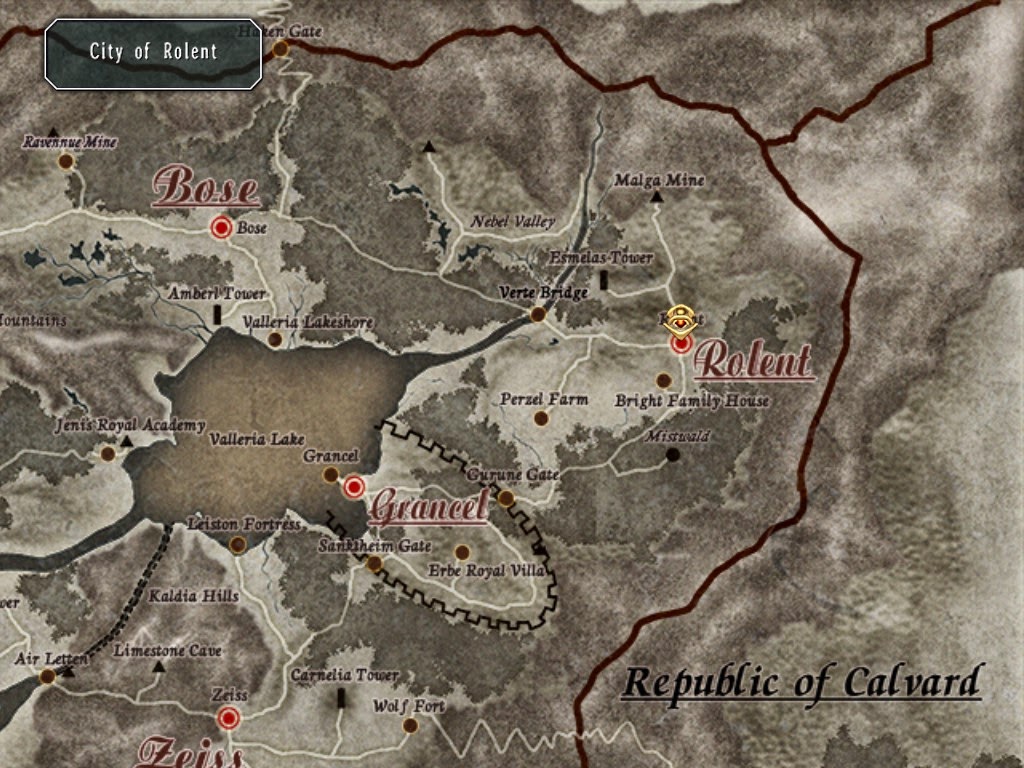
If there's one trend I would of never seen coming in gaming, it's Japanese RPGs on PC. outside of stuff by indie devs, JRPGs had been content to stick to consoles and handhelds, but lately there's been a trickle of them showing up on Steam and there seems to be a slowly growing interest on seeing more of them on PC. enter The Legend of Heroes: Trails in the Sky. the first part of a trilogy, itself part of a much larger series. This game had initially seen a release in North America on the Playstation portable, with no sign of the second and third games being released until last year, when XSEED announced not only is a translation of the second chapter in the works, but it, along with the first chapter, would see release on PC.

Trails in the sky is about a pair of characters named Estelle and Joshua, and their attempts to become what are known as Bracers, basically adventurers for hire. As you might expect, this seemingly simple task ends up anything but. I should note that there is a LOT going on in this story, not only due to it being a fairly long game, but because this is the first game in a trilogy, so the game has to lay out a lot of ground work for the later games. Fortunately, while there's a lot of information to chew through, I never found the game very hard to follow. It helps that the game has some wonderful characters and a good sense of pacing: The story is serious and treated as such, but there's enough humor and lighter moments to keep thing from getting too straight faced for it's own good.
You will meet several characters in your journeys, some weirder than others.
At it's core, the gameplay for Trails in the sky should be fairly familiar for anyone who's played a JRPG before: you travel a very large world, solving various quests and fighting in turn based battles. it's worth noting however, that battles battles have a bit more to them than a typical JRPG, rather than your party and enemies lining up to trade blows, battles take place on a grid that characters can move around on. This changes things form a more typical JRPG because you can't simply attack, you have to be able to reach enemies to hit them, also spells take some time to cast and while many can simply target a specific area, some have an area of effect need to be targeted, forcing you to think ahead to where enemies might be in the next few turns when deciding where to aim them. at the same time, some enemy attacks can be avoid by using your characters turn to move out of the way. It forces you to think about how the battle is going and not just constantly attack, pausing only to use the occasional healing spell or item.

Another thing that stands out in the game is orbments While the game does have various pieces of equipment your characters can wield and wear, orbments are how you really customize them. Each character has an orbment with several slots you can put what are called quartz into. These quartz have various elemental values and the total value of the quartz decide what spells the character has access to, on top of that, the quartz themselves can have various stat bonuses or penalties on them, as well as extra bonuses like decreasing the casting cost of your spells, called arts in this game. it's actually a fairy complex system, where slots can require certain types of quarts, and there's lines that decide how your quarts various values are added up. fortunately it's easy to come to grips with once you've tinkered with it for a bit, and the game has a built in magic list so you can see what values you need for what spells.
Battles take place on a large grid
On top of a lengthy main quest, the game also has a number of side quests. From the bracers guild in any town you can pick up any of a number of side quests that range from finding lost items to exterminating dangerous monsters to delivering items.  Fortunately, these side quests are not your typical MMO-style 'find x items' or 'kill x monsters' quests, some of them involve various puzzles, and even the simplest of them: exterminating dangerous monsters' have specific encounters for you to deal with and aren't just random monsters. There's even some hidden quests if you're willing to explore and not just rely on what's in the guild. It helps break up the main quest and gives you a good reason to explore the world beyond what's strictly necessary.

It should also been noted that the game has a very large world. While there's only five major towns to visit, there's plenty of side areas and smaller villages to explore. each chapter of the game takes place in a different section of the world map, and exploring any one of them can take some time. Exploring is also well rewarded, as useful items are often hidden off the main path. This size however, does come with one drawback. The game has no fast traveling, and you're often required to travel between several distant locations. Granted, the game world isn't as large as a full blown sandbox game like Skyrim, but it's still a lot of ground to be stuck repeatedly traveling through.

There's a lot of ground to cover in this game

Graphically the game is pretty decent, the game uses 3D graphics mixed with sprites that appear to be based off 3d models, everything looks nice, textures are nice and colorful, and hte game world is nicely detailed without becoming cluttered. The only major fault I noted is the animation for some of the 3D objects in the game seemed a bit choppy, but otherwise there's nothing to really complain about.

The game's sound is also decent: Everything sounds like it should and while the game doesn't have much voice acting beyond a few lines used in battle, what's there is done well enough. The music, is actually very nice. Falcom is known for producing some great soundtracks and this game is no exception. Though I should note for those who know of Falcom mostly through Ys and are coming here from that series, this game is an entirely different beast so sorry, no rock music to headbang to.
Attempting to take items form the same chest twice has interesting results
Overall I would highly recommended this game if you like RPGs, JRPGs in particular. it's a very large game that took me over 40 hours to beat, and even then I missed quite a few things, the story is well told and the characters are very likeable. As I've said before there seems to be a recent trend with JRPGs showing up on PC and out of all the games involved, this is one of the ones to get.

The Legend of Heroes: Trails in the Sky was developed by Nihon Falcom and published by XSEED and Marvelous USA, Inc. It is available on Steam and GoG. It's homepage is available here.